R450,00
The ‘Love Peptide’, Social Bonding, Trust, Emotional Connection, Anxiety Reduction, Mild Pain Modulation.
R450,00
9 in stock
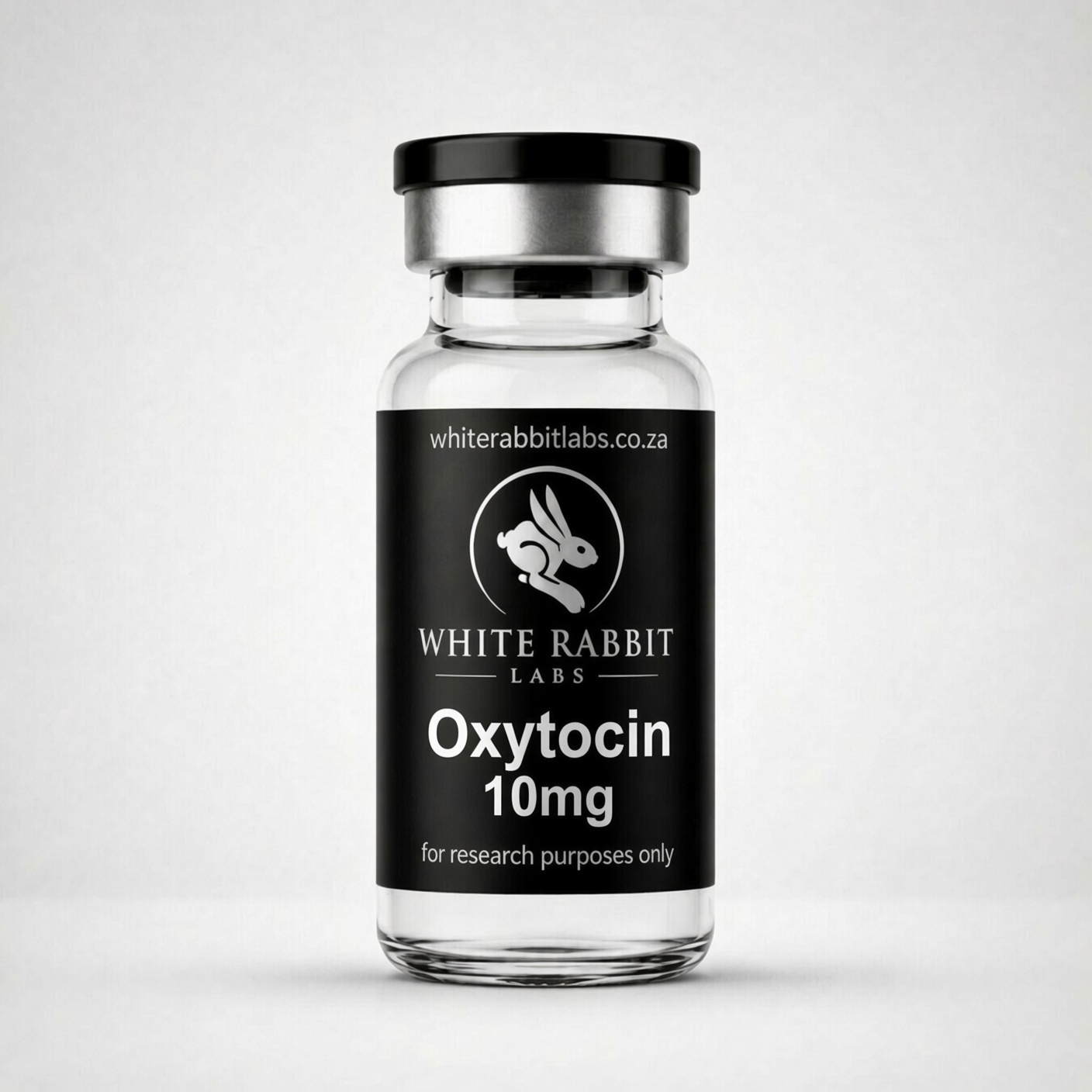
Oxytocin is a lab-made nonapeptide – an exact copy of the 9-amino-acid natural hormone your hypothalamus produces and your posterior pituitary releases. It has been called the ‘love hormone,’ ‘cuddle hormone,’ or ‘bonding hormone’ because it drives social connection, trust, empathy, maternal behavior, and pair bonding.
Think of oxytocin as your brain’s and body’s ‘connection and calm ‘messenger – it helps you bond with others while also handling critical reproductive functions.
How it works:
Binds to oxytocin receptors in the brain (amygdala, hypothalamus, reward centers) and peripheral tissues (uterus, mammary glands).
– Reduces fear/anxiety signals, boosts trust/empathy, and triggers uterine contractions + milk ejection.
– Social bonding & emotional connection – increases trust, empathy, and pair-bonding; may improve social cues in autism or relationship therapy.
– Anxiety & stress reduction – calms the brain’s fear centers; potential help for social anxiety or PTSD-related issues.
– Appetite & metabolic signals – emerging research shows nasal forms can reduce hunger and support weight management in obesity.
– Bonus: mild pain modulation, wound healing hints, and possible sexual/well-being support in specific populations.
In short: It literally helps you ‘feel the love’ while doing essential medical jobs – one of the most pleiotropic (multi-tasking) peptides/hormones we’ve covered.
When used correctly under medical supervision, oxytocin is very well-tolerated – decades of obstetric data confirm this.
In approved use: Closely monitored; most issues are manageable.
Common/mild (especially nasal research forms):
– Headache, flushing, nausea, or mild nasal irritation.
– Transient increase in heart rate or blood pressure.
Serious (rare with proper dosing, mainly IV):
– Uterine hyperstimulation (too-strong contractions) or water intoxication (if over-infused IV).
– Emotional blunting or hypersensitivity to social cues in some users.
Bigger caveats:
– Not for people with certain heart conditions or without monitoring.
– Nasal forms are unregulated for wellness use quality and exact dosing vary.
– Theoretical risk of dependency on external sources for bonding effects (unproven).
Reconstitution, dosage and cycling protocols for research purposes.
Method of Administration: Subcutaneous into fatty tissue.
Reconstitution: 3ml Bac water into single vial. See Reconstitution Guide.
Dose: Tiny dose. 50mcg daily, therefore 3 units or 0.03ml. Use peptide calculator for alternative dosage.
Course: 100 doses.
Cycling: No cycling needed
Tip: Reconstitute with bacteriostatic water; store in fridge. Use insulin syringes and sterile technique.
Oxytocin has massive human data from its approved use plus hundreds of modern trials on nasal forms.
1. Mayo Clinic & Medscape prescribing info (updated 2026): Full FDA-approved dosing, indications (labor & postpartum hemorrhage), and safety profile.
2. Alsayegh et al. (2025/2026) Frontiers in Endocrinology review: Intranasal oxytocin (24 IU) reduces appetite and increases fullness in obesity studies; promising brain-based treatment.
3. Guastella et al. (2023) Molecular Psychiatry RCT: Nasal oxytocin in young children with autism – some social responsiveness improvement in younger kids; well-tolerated.
4. Mills et al. (2025) JCEM: Nasal oxytocin restored sexual/attraction brain processing in women with HSDD; safe and targeted.
5. StatPearls NCBI (updated 2025): Comprehensive mechanism, approved uses, and peripheral/central effects.
6. Tonix Pharmaceuticals TNX-2900 update (20252026): Potentiated intranasal oxytocin advancing to Phase 2 for Prader-Willi syndrome (hunger control).
7. Flanagan et al. (2025) RCT: Intranasal oxytocin + couple therapy for alcohol recovery – feasible and safe but no extra benefit beyond therapy.
8. Riem et al. (2025) Neuroscience & Biobehavioral Reviews: Three-stage roadmap for responsible clinical translation of nasal oxytocin.
9. McCormack et al. (2023, referenced 2026) JES pilot: Intranasal oxytocin promoted weight loss in hypothalamic obesity; safe with mild side effects.
10. Carter (2020/updated reviews): ‘Nature’s medicine’ overview – stress-coping, anti-inflammatory, and bonding roles.
Takeaway: Decades of rock-solid data for labor/postpartum + promising modern trials for social, metabolic, and neurological uses.
Muscle Growth, Recovery, Fat Loss, Metabolic Booster, Anti-Aging, Wellness, Sleep Enhancement.
R450,00
Cartilage Protection, Joint Health, Osteoarthritis Progression, Connective Tissue Repair, Anti-Inflammatory & Anti-Aging effects
R550,00
Neuroprotection, Cognitive Enhancement, Memory, Learning Speed, Focus, Anti-Aging, Brain Support, Neuroinflammation, Strong Sleep Aid.
R590,00
TRT Support, Natural Testosterone Boost, Fertility support, Ovulation Induction, Improved Sexual Desire, Reproductive System Enhancement
R840,00
The Beauty Peptide, Skin Rejuvenation, Wound Healing, Hair and Nail Growth, Anti-Aging, Skin Rejuvenation, Wrinkle reduction, Skin Elasticity, Anti-Oxidant, Scar Reduction, Inflammation, Hair Growth.
R380,00
Significant Fat Loss, Body Composition, Strength and Muscle Retention, Insulin Sensitivity, Mitochondrial Energy, Longevity, Glucose Control.
R550,00
All products are sold in powder (lyophilized) form and require reconstitution with a suitable diluent for research purposes only. Research supplies (e.g., syringes, bacteriostatic water) are not included and need to be purchased separately. No personal human dosing instructions are provided, only research dosages from clinical studies. We adhere to all local and national (SAHPRA) laws around Research Only Chemical sales. We are not a pharmacy, nor do we promote or provide any advice for human or animal consumption. Please review our terms and conditions carefully before making a purchase on our website.
You must be 21+ and a licensed research professional.
By clicking “I Agree” you confirm that you have read and accepted the Terms and Conditions stated above.