
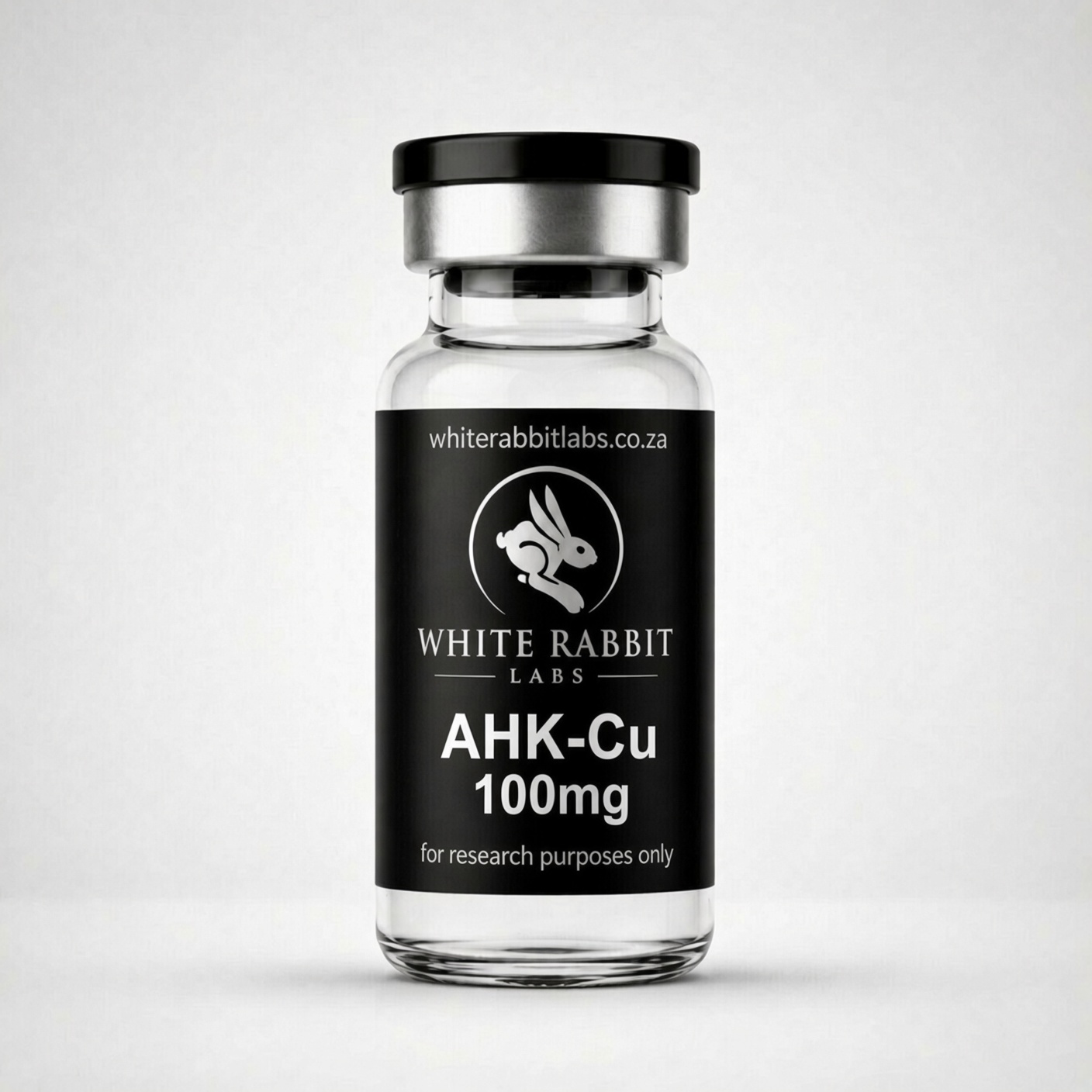
AHK-Cu (Ala-His-Lys-Cu²⁺), also listed as Copper Tripeptide-3, is a small synthetic copper-binding tripeptide. It shares the histidine-lysine copper-coordination motif of GHK-Cu but substitutes alanine for glycine at the N-terminus, producing a distinct complex used in cosmetic and laboratory research.
Published work on this specific molecule is limited. The primary peer-reviewed study (Pyo et al., Archives of Pharmacal Research, 2007) examined isolated human hair follicles and cultured dermal papilla cells. In that model, AHK-Cu at picomolar-to-nanomolar concentrations was associated with:
• Increased follicle elongation in organ culture
• Greater dermal papilla cell proliferation
• Higher VEGF expression
• Lower TGF-β1 expression
• Shifts in apoptotic markers consistent with reduced programmed cell death in papilla cells
Copper itself is a cofactor for enzymes involved in extracellular-matrix crosslinking (e.g. lysyl oxidase), antioxidant defense (SOD), and melanin-related pathways (tyrosinase). The peptide is studied as a vehicle that can present Cu(II) in a coordinated form rather than as a free salt.
AHK-Cu is not an endogenous human peptide. It does not have randomized human trials, approved drug indications, or established injectable protocols. Most commercial interest is topical / formulation research around scalp and follicle models. Evidence should not be extrapolated from the much larger GHK-Cu literature.
Supplied as research material in a 50 g vial. For laboratory and formulation research only. Not for human consumption, clinical use, or diagnostic purposes.


Reviews
There are no reviews yet.