
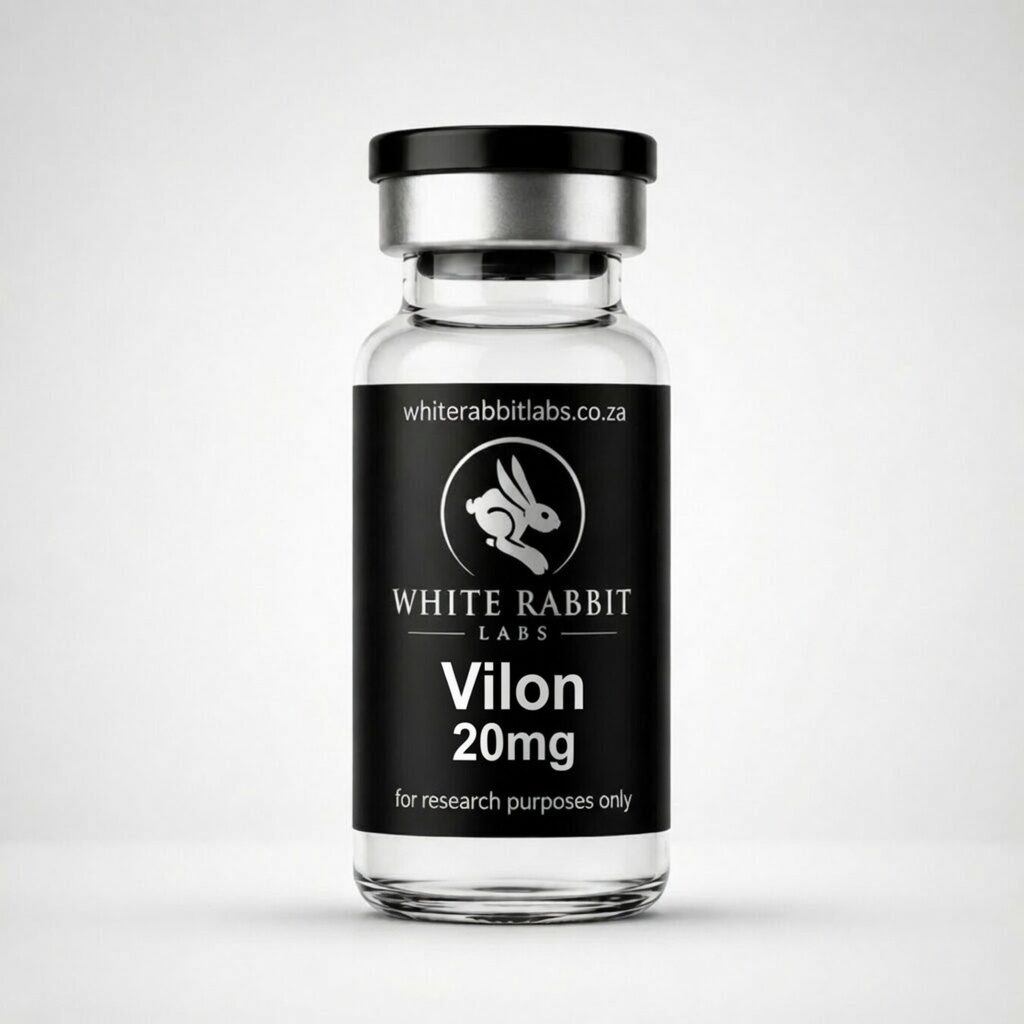
Vilon is a synthetic dipeptide consisting of L-lysine and L-glutamic acid (sequence Lys-Glu, or KE), developed by Professor Vladimir Khavinson and colleagues at the St. Petersburg Institute of Bioregulation and Gerontology as the minimal active fragment related to thymic peptide complexes such as Thymalin. As one of the shortest bioactive peptides studied in this research lineage, it has drawn attention for its proposed role as a tissue-oriented bioregulator with particular relevance to immune cells, including thymocytes and lymphocytes.
Research indicates that Vilon can enter cells and interact with nuclear structures. Studies have explored its capacity to bind specific DNA motifs (such as sequences in promoter regions) and influence chromatin architecture. In cultured lymphocytes from elderly donors, Vilon has been shown to promote deheterochromatinization of facultative heterochromatin, reactivate ribosomal genes in nucleolus organizer regions, and help release genes previously repressed by age-related chromatin condensation—without broadly disrupting structural heterochromatin. These observations support a hypothesized epigenetic-style mechanism that may help restore more youthful patterns of gene activity in immune-related cells.
Gene-expression work has linked Vilon to modulation of pathways involving interleukin-2 (IL-2) signaling (important for T-cell activity), cell-cycle and DNA-replication genes, and longevity-associated factors such as SIRT1 and PARP family members involved in DNA repair and cellular stress responses. In human mesenchymal stem cell models, effects on these pathways have been reported, aligning with broader investigations into cellular resilience and repair processes. Microarray-style analyses in tissue models (including cardiac tissue) have documented changes in dozens of gene clones, with combinatorial effects noted when studied alongside other short peptides.
Preclinical animal studies form a notable part of the research record. Chronic administration of Vilon in female CBA mice (starting in mid-life) was associated with increased physical activity and endurance, modest lifespan extension, reduced spontaneous tumor incidence (including lung adenomas), and overall inhibition of spontaneous neoplasm development. Complementary work in aged rats has examined improvements in intestinal enzyme activities (such as maltase and alkaline phosphatase), consistent with support for digestive and barrier functions that often decline with age. Additional observations include comitogenic effects on thymocyte proliferation and influences on immune-cell parameters in experimental settings.
Collectively, the body of work positions Vilon as an intriguing candidate within short-peptide bioregulation research for its dual focus on immune-system gene networks and age-related cellular processes. The findings highlight potential in areas of immunosenescence support, chromatin dynamics, DNA-repair signaling, and geroprotection, primarily demonstrated through in-vitro human-cell models and rodent longevity/tumor studies originating from the Khavinson research tradition. While the mechanistic insights into nuclear access and selective gene modulation remain compelling within this specialized field, the evidence base is strongest at the preclinical and cellular levels. This makes Vilon a compound of ongoing scientific interest for researchers exploring ultra-short peptides as tools for studying and potentially influencing tissue-specific gene expression patterns associated with aging and immune function.




Reviews
There are no reviews yet.