
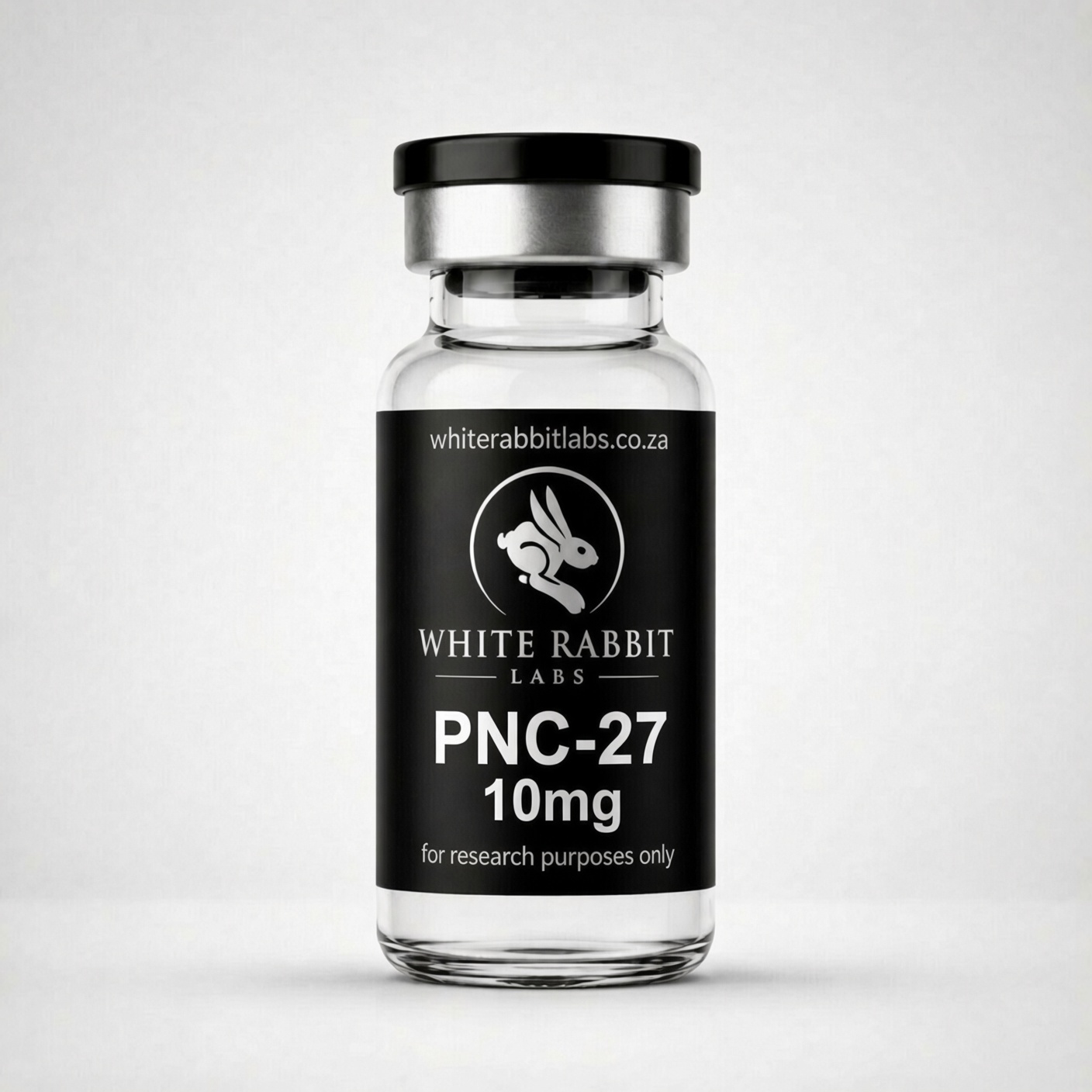
PNC-27 is a synthetic chimeric peptide developed for cancer-cell research. It joins the HDM-2-binding segment of the p53 tumor-suppressor protein (amino acids 12–26) to a penetratin-type membrane-residency peptide. Researchers originally designed it as a decoy to interrupt p53–HDM-2 binding inside cells; later work showed the linked construct acts mainly at the plasma membrane.
Many cancer cell lines and some primary tumors display HDM-2 on their surface; most untransformed cells tested do not. PNC-27 binds that surface HDM-2, adopts an amphipathic helix-loop-helix shape, and promotes transmembrane pores. Contents leak out and the cell dies by necrosis (sometimes called “poptosis”), a process that does not require intact p53 or classic apoptosis pathways. Control peptides lacking either domain, or the two domains given separately, do not produce the same effect. Engineering membrane-localized HDM-2 into otherwise resistant normal cells can make them sensitive, supporting HDM-2 as the key target.
Published work reports activity against a range of solid-tumor and hematopoietic lines (breast, pancreatic, colon, lung, melanoma, ovarian, AML and others), including some chemotherapy-resistant and stem-like populations, and tumor reduction in several mouse models. Normal fibroblasts, epithelial cells, and hematopoietic stem cells in those studies were largely unaffected. Electron microscopy has visualized peptide–HDM-2 complexes around the pores.
PNC-27 remains a preclinical research tool. There are no completed, published late-stage human trials establishing safety or efficacy as a cancer treatment, and it is not an approved drug.





Reviews
There are no reviews yet.