
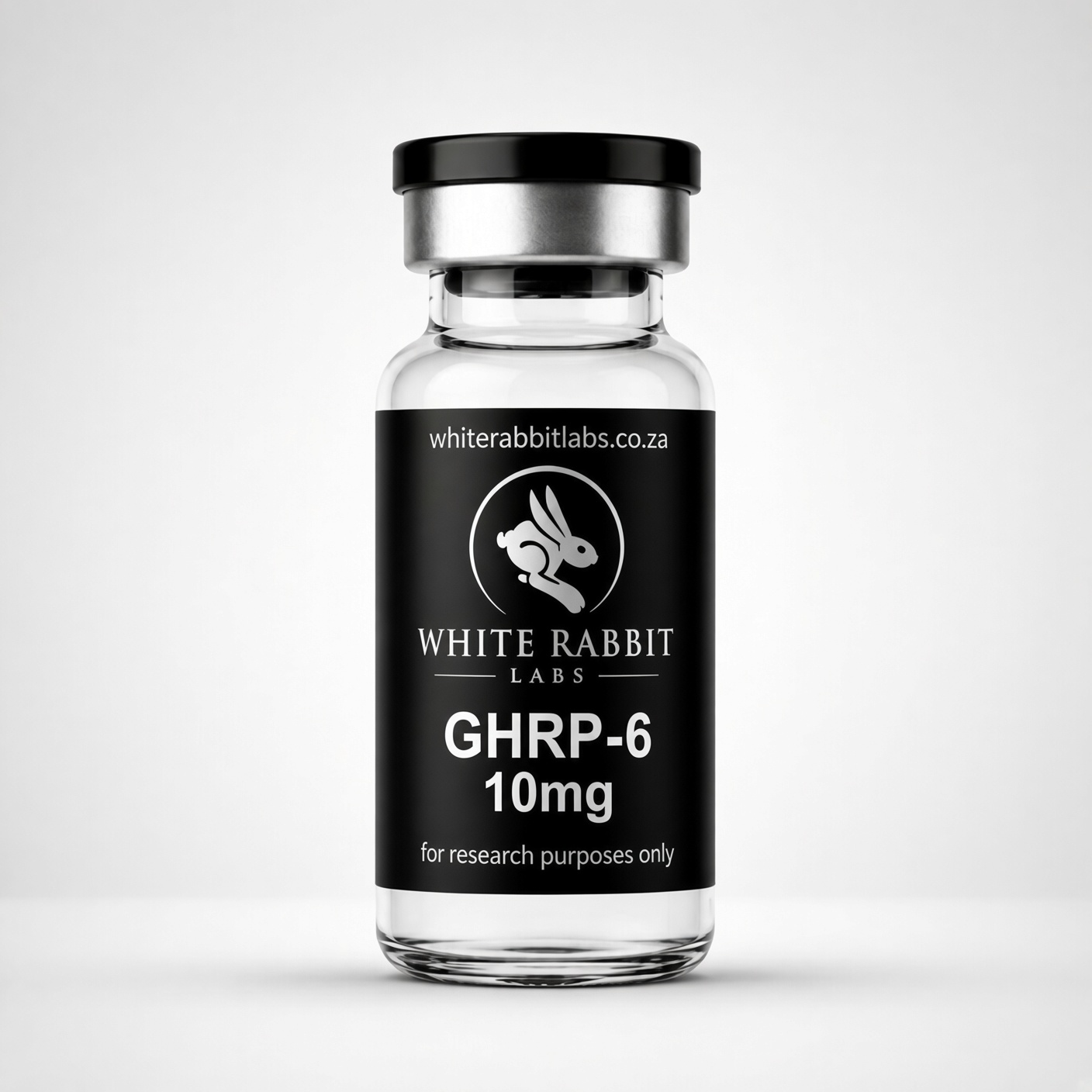
GHRP-6 is a first-generation synthetic growth hormone secretagogue consisting of six amino acids (sequence: His-D-Trp-Ala-Trp-D-Phe-Lys-NH₂; molecular weight ≈ 873 Da). It was developed in the late 1980s as a tool to study GH release and later identified as a ligand for the then-orphan GHS-R1a receptor, whose endogenous ligand is ghrelin.
Mechanism of Action
GHRP-6 binds GHS-R1a on somatotroph cells in the anterior pituitary. Receptor activation couples to Gq/11 proteins, stimulates phospholipase C, generates IP₃ and diacylglycerol, and elevates intracellular calcium. This triggers exocytosis of stored growth hormone, producing a rapid, dose-dependent GH pulse that typically peaks within 15–30 minutes and returns to baseline within 60–90 minutes.
Concurrently, hypothalamic GHS-R1a activation increases endogenous GHRH tone and suppresses somatostatin, amplifying the pituitary response. GHRP-6 also engages the scavenger receptor CD36, which has been linked in preclinical work to cytoprotective, anti-fibrotic, and cardioprotective signaling (PI3K/Akt, Bcl-2 upregulation).
Pharmacodynamic Effects
• Potent, reproducible GH release (saturation dose approximately 1 mcg/kg).
• Strong orexigenic (appetite-stimulating) effect mediated by hypothalamic NPY/AgRP neurons — more pronounced than with later-generation GHRPs such as ipamorelin.
• Transient, dose-dependent increases in ACTH, cortisol, and prolactin.
• Downstream elevation of IGF-1 with repeated administration.
Research Context
Human studies have confirmed acute GH stimulation and appetite effects. Combination testing with GHRH has been validated as a diagnostic tool for adult GH deficiency. Preclinical models have explored cardioprotection, reduction of infarct size, anti-fibrotic activity, and cytoprotection under various stressors. Controlled long-term data on body composition outcomes in healthy adults remain limited.
Safety and Regulatory Status
GHRP-6 is not FDA-approved for any indication. Available human data indicate generally good short-term tolerability at standard research doses (commonly 100 mcg subcutaneously). Documented effects include marked hunger, mild water retention, and transient elevations in cortisol and prolactin at higher doses. Regulatory reviews have noted potential immunogenicity risks related to peptide impurities and aggregation, as well as concerns regarding cortisol and insulin sensitivity. It is prohibited by WADA under the peptide hormones section.
In research settings, GHRP-6 is typically administered subcutaneously 1–3 times daily, often in the fasted state, to align with natural GH secretory patterns. Quality verification and appropriate clinical oversight are required given its investigational status.

Reviews
There are no reviews yet.